Translating Global Field Research into Scalable Platform Decisions
Role: UX/UI Designer (Research Lead)
Client: BASF Coatings
The problem
Refinity served multiple regions and roles with significantly different workflows. Internal teams lacked a shared understanding of user needs, resulting in:
Siloed feature development
Misaligned roadmaps
Persistent user friction outside the core product
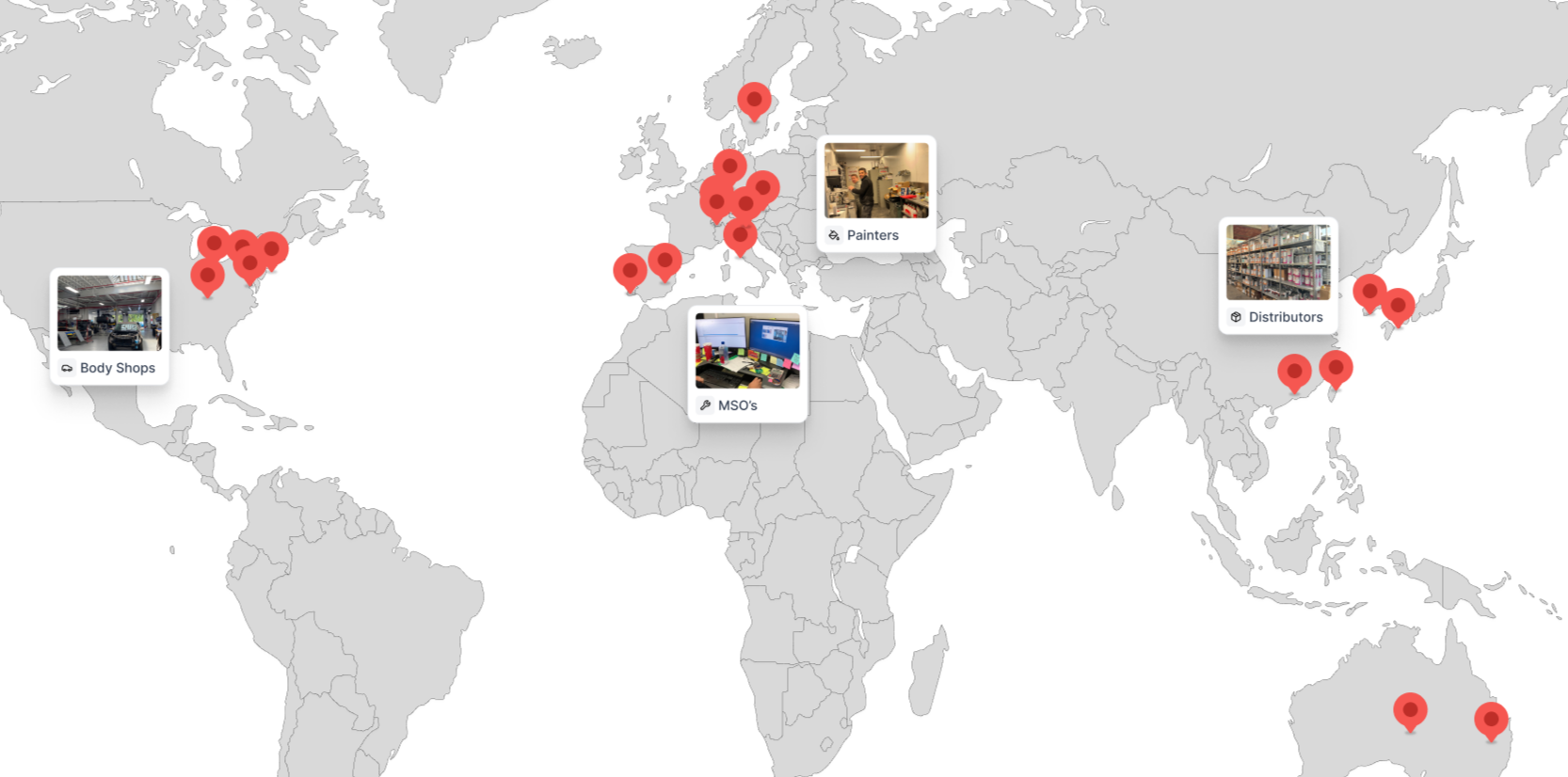
Scope: Global research across NA, EU, and Asia
Users: Painters, shop managers, distributors, internal teams
Time: 2023-2025
I led a multi year global research initiative to create a shared understanding of user needs across a highly fragmented platform serving multiple regions and roles. The work focused on aligning internal teams around validated insights and translating research into clear ownership, prioritization and roadmap direction.
I directly led research in North America and Europe and partnered with a local UX research team in Asia, collaborating closely on research planning. Findings from this work informed strategic decisions across 5 teams.
Approach
Methods
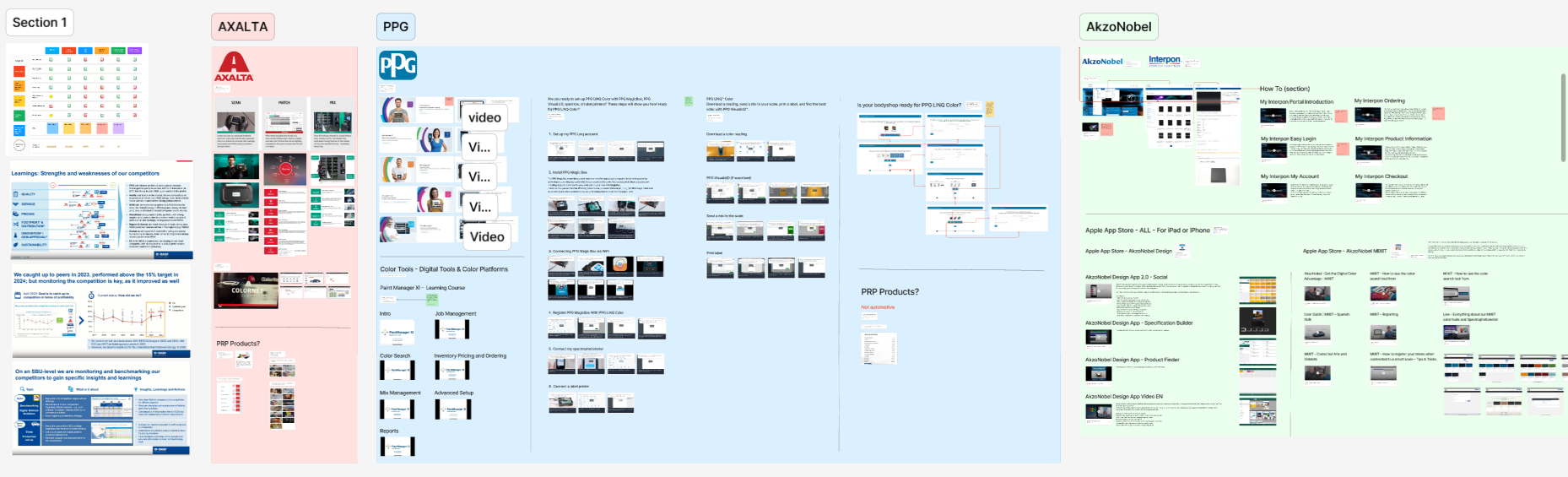
Competitive analysis
Field research (jobsite shadowing + interviews)
Surveys (Asia, via local partner)
Journey mapping
Persona development
Pain point prioritization
Ownership
Led NA & EU research directly
Owned research planning and synthesis globally
Partnered with APAC UX team for execution
Key Insights
Color selection and reporting were critical breakdown points
Users created manual workarounds to compensate for system gaps
Internal ownership gaps mirrored user experience gaps
Competitive Analysis
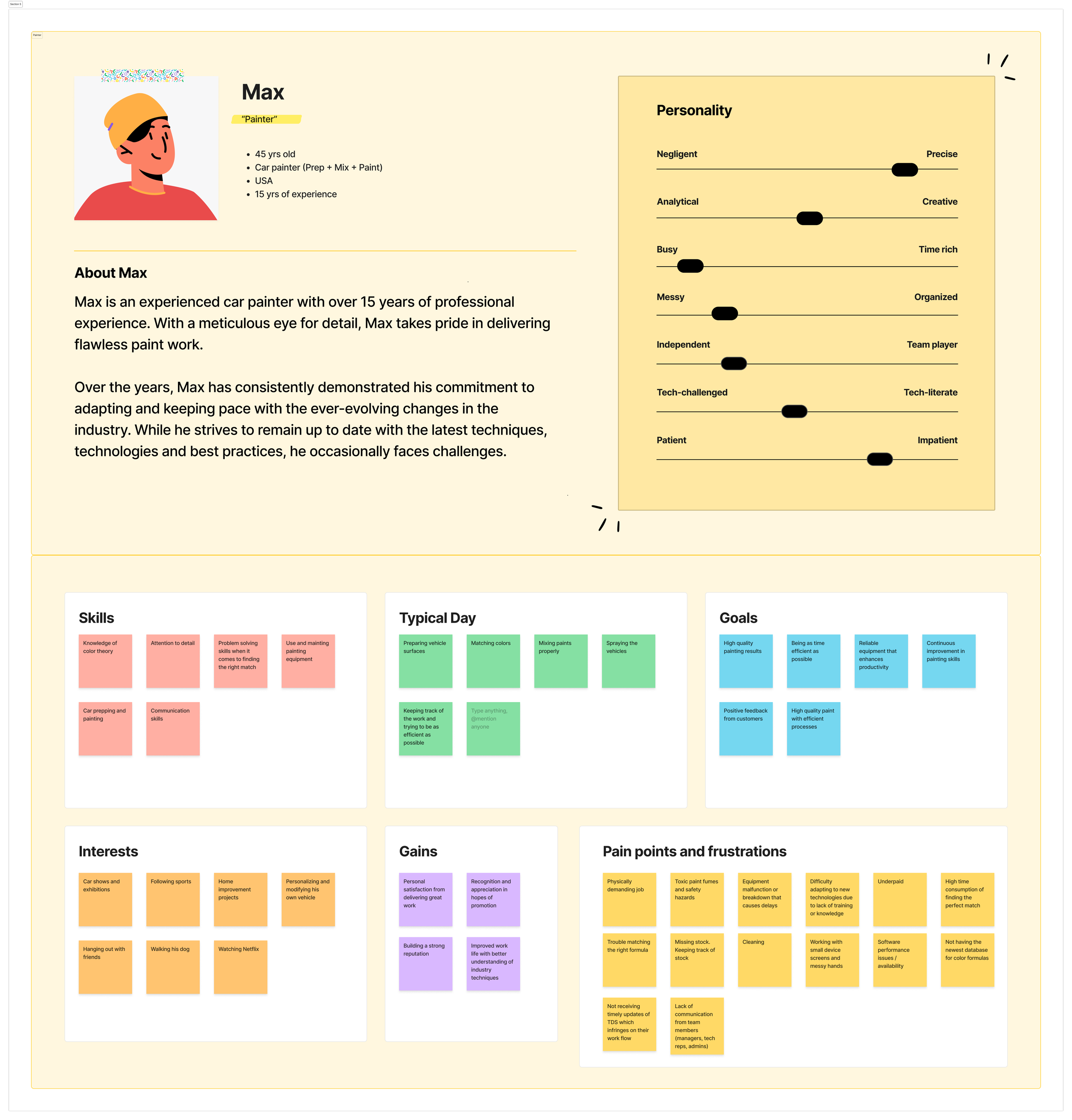
Insights from the field visits informed the creation of a dedicated painter persona that represented their goals, constraints, and end-to-end color workflow. This persona became my north star throughout the redesign, grounding design decisions in real-world behaviors and ensuring the experience consistently supported painters in their day-to-day work.
Field Visits
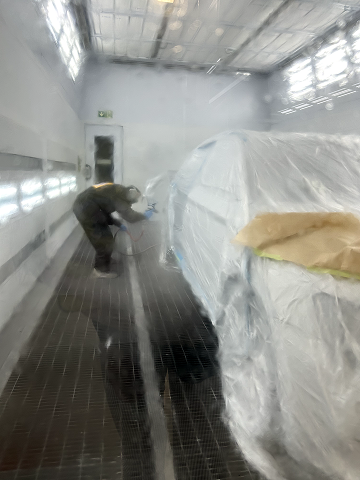
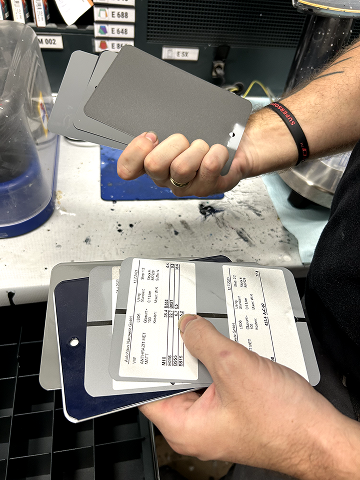
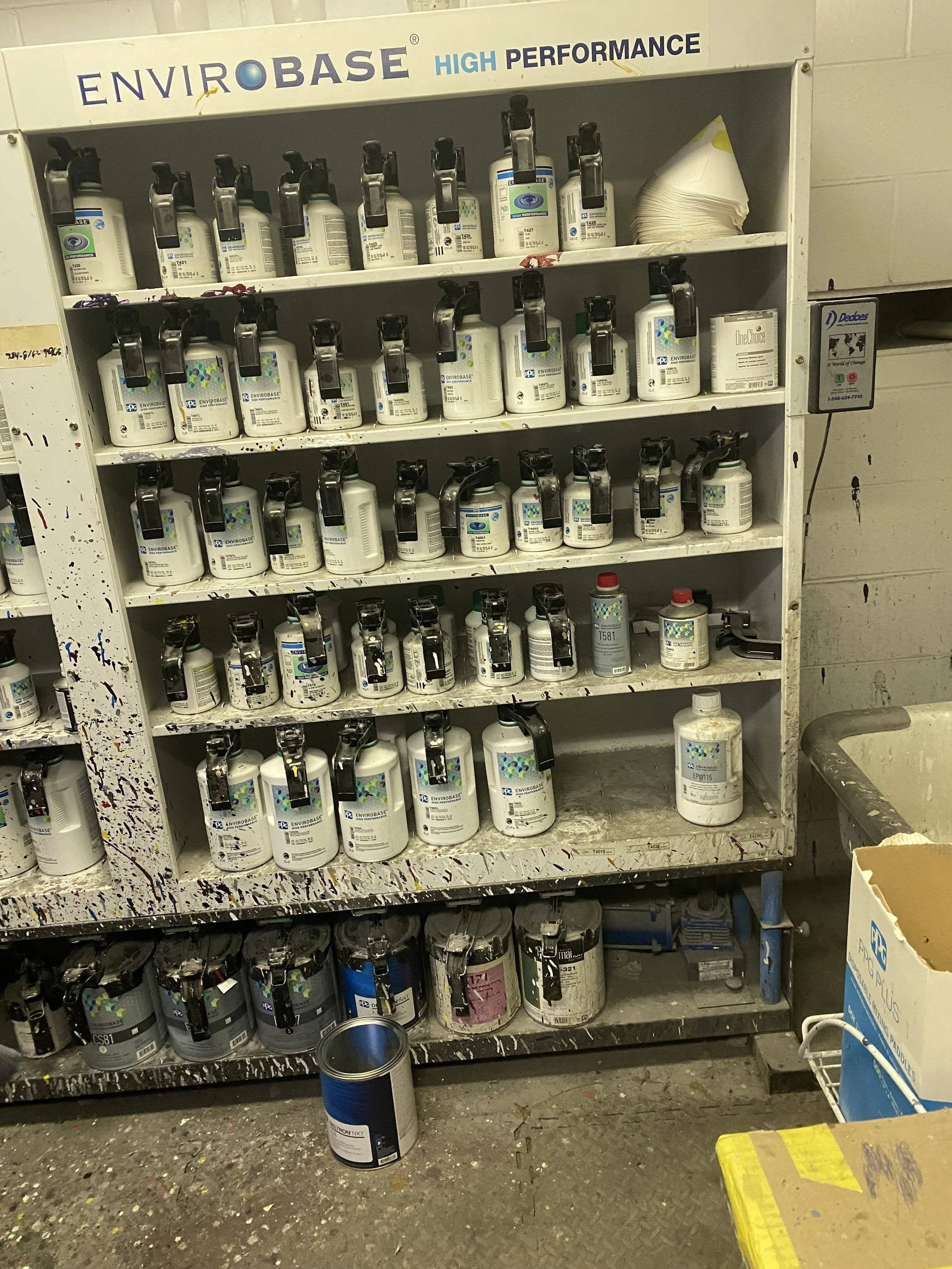
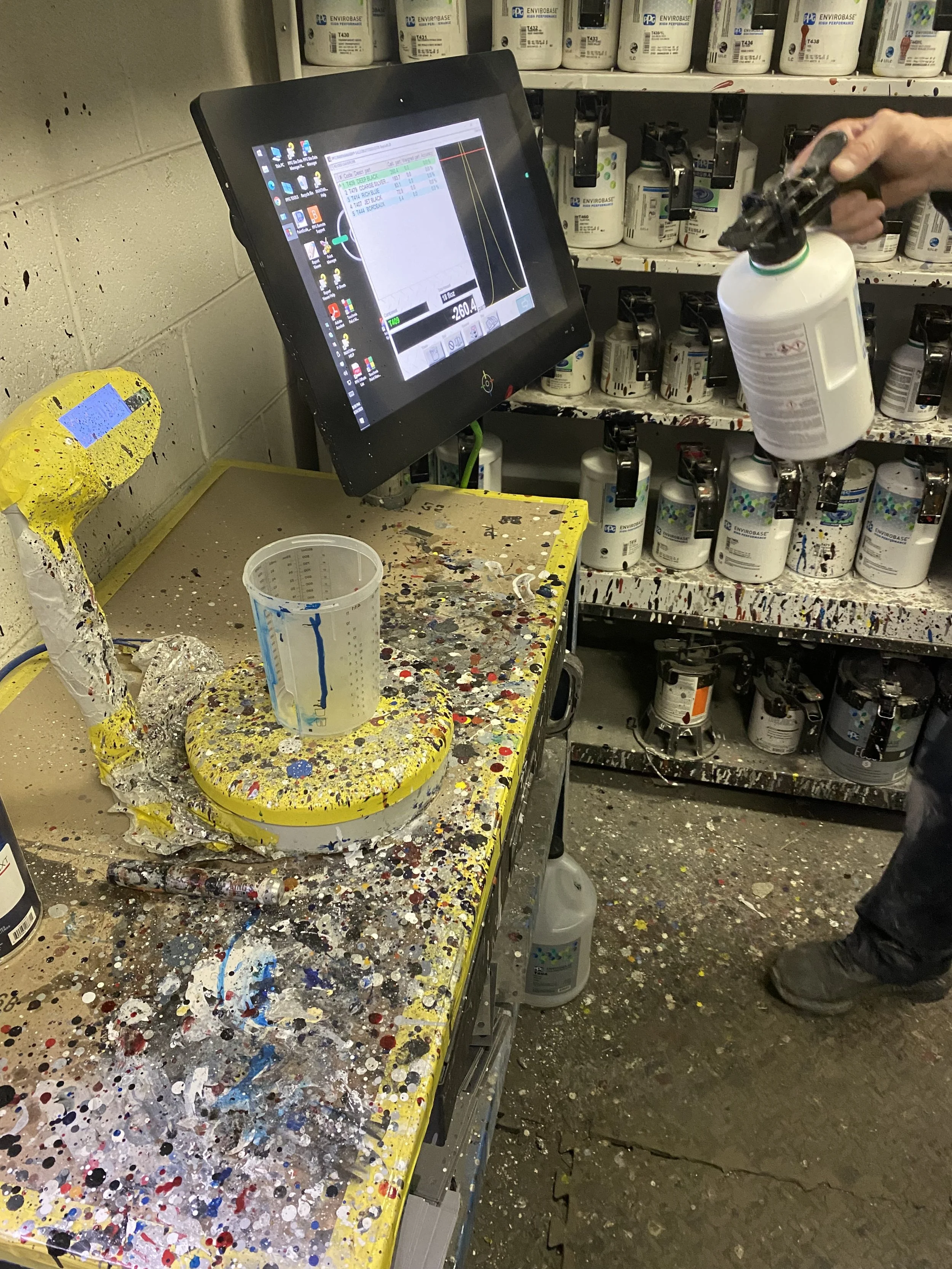
To deeply understand how painters use the application, I conducted field visits in active body shops. Seeing the software in its real environment revealed critical context that couldn’t be captured through screens alone — painters working in noisy, fast-paced spaces, often with gloves on, juggling physical tools while moving between vehicles, paint booths, and mixing stations.
These visits highlighted how time pressure, environmental constraints, and interruptions shape how painters interact with the product, reinforcing the need for a fast, clear, and low-friction experience.
Asia Research
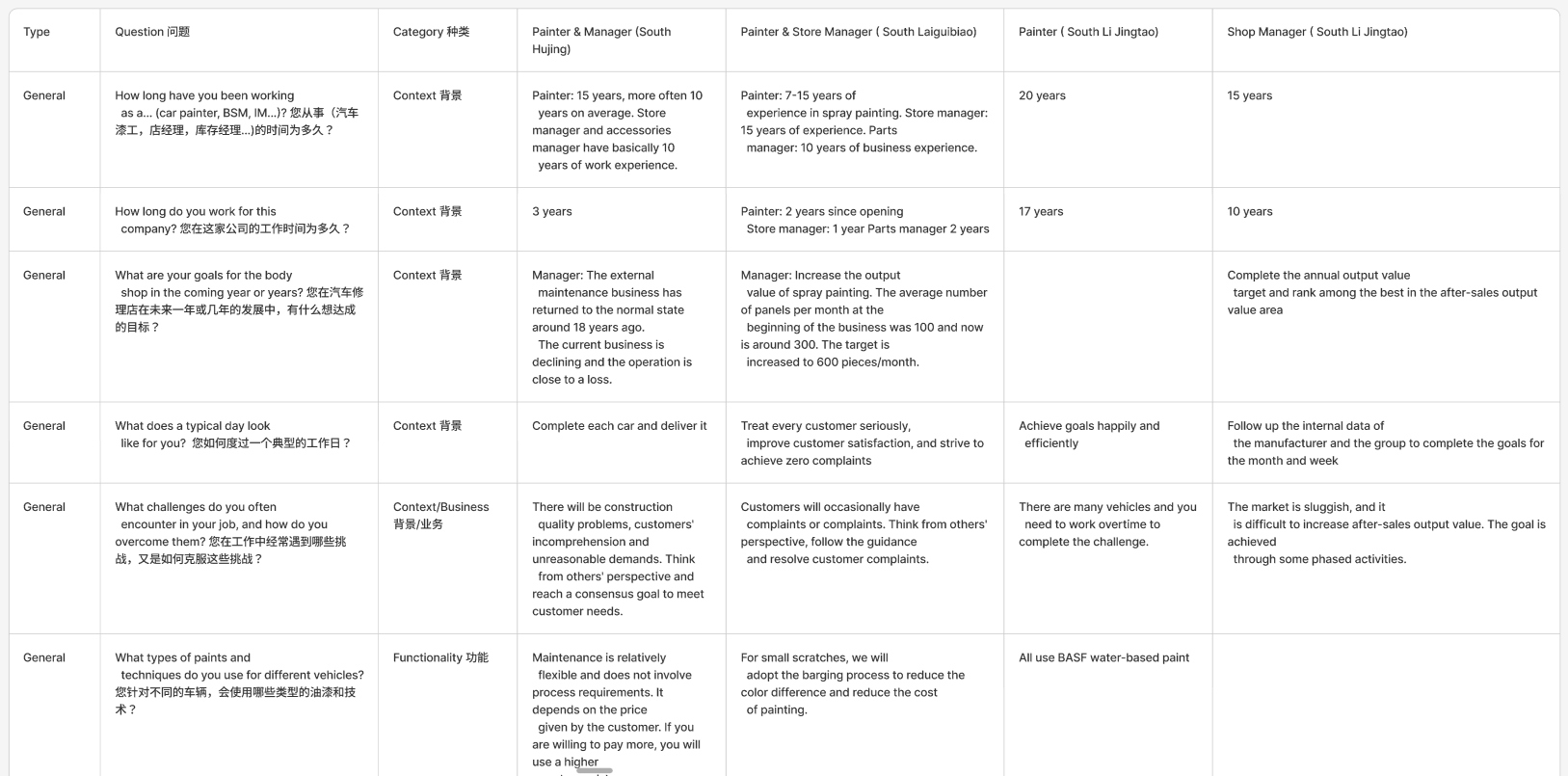
While research execution was handled locally due to language and cultural context, I owned research planning, question design, and synthesis to ensure insights aligned with global findings.
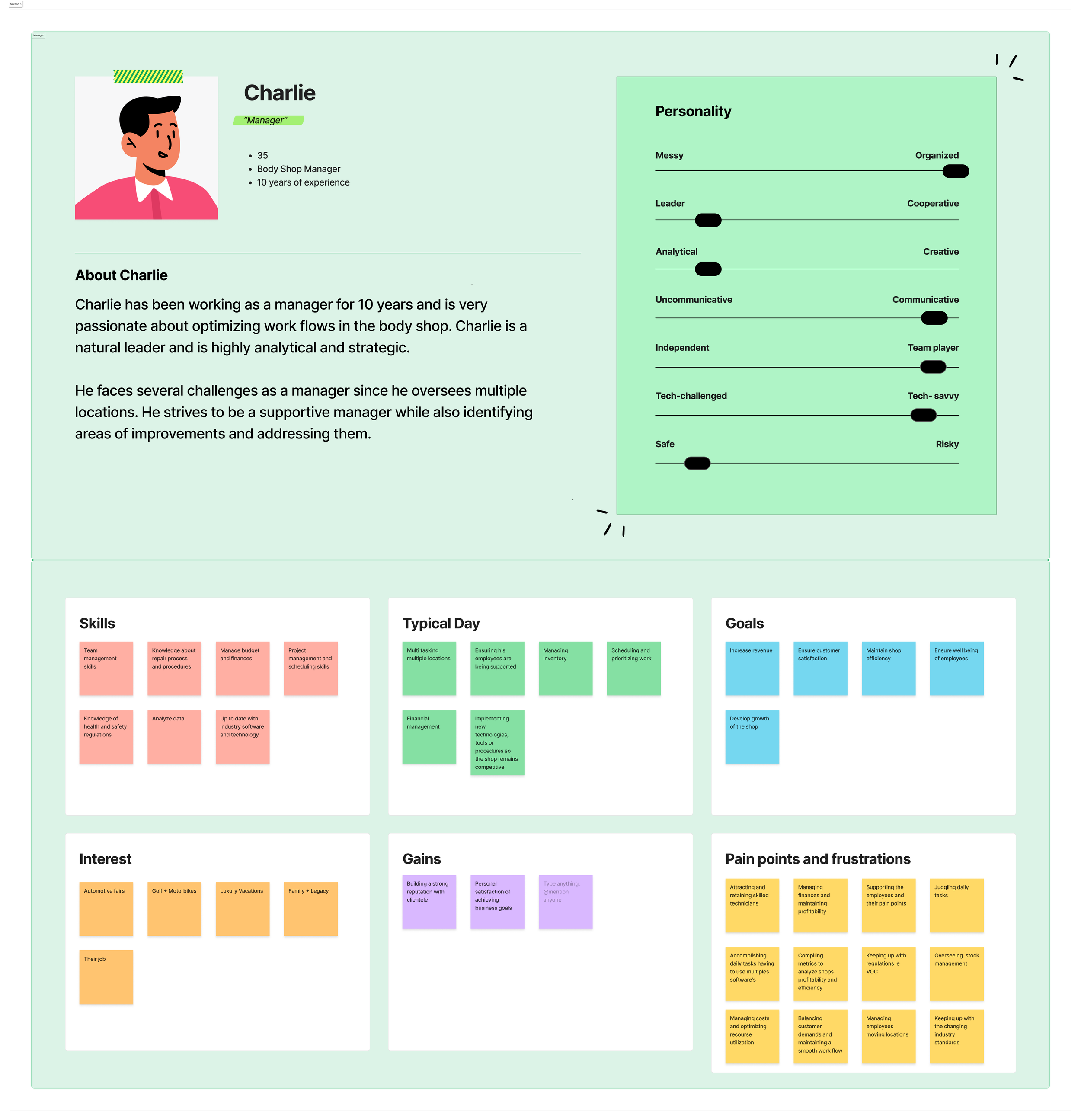
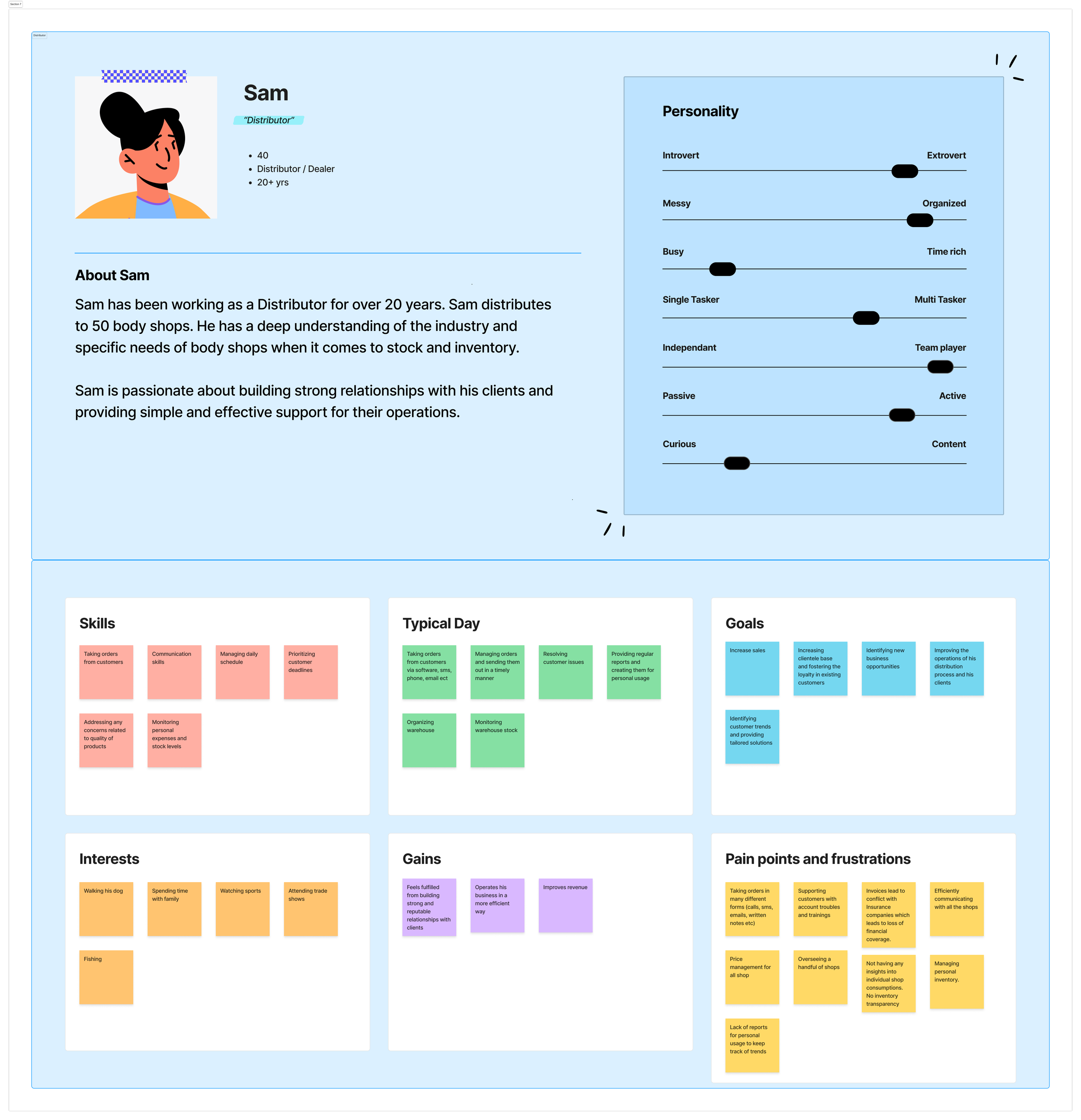
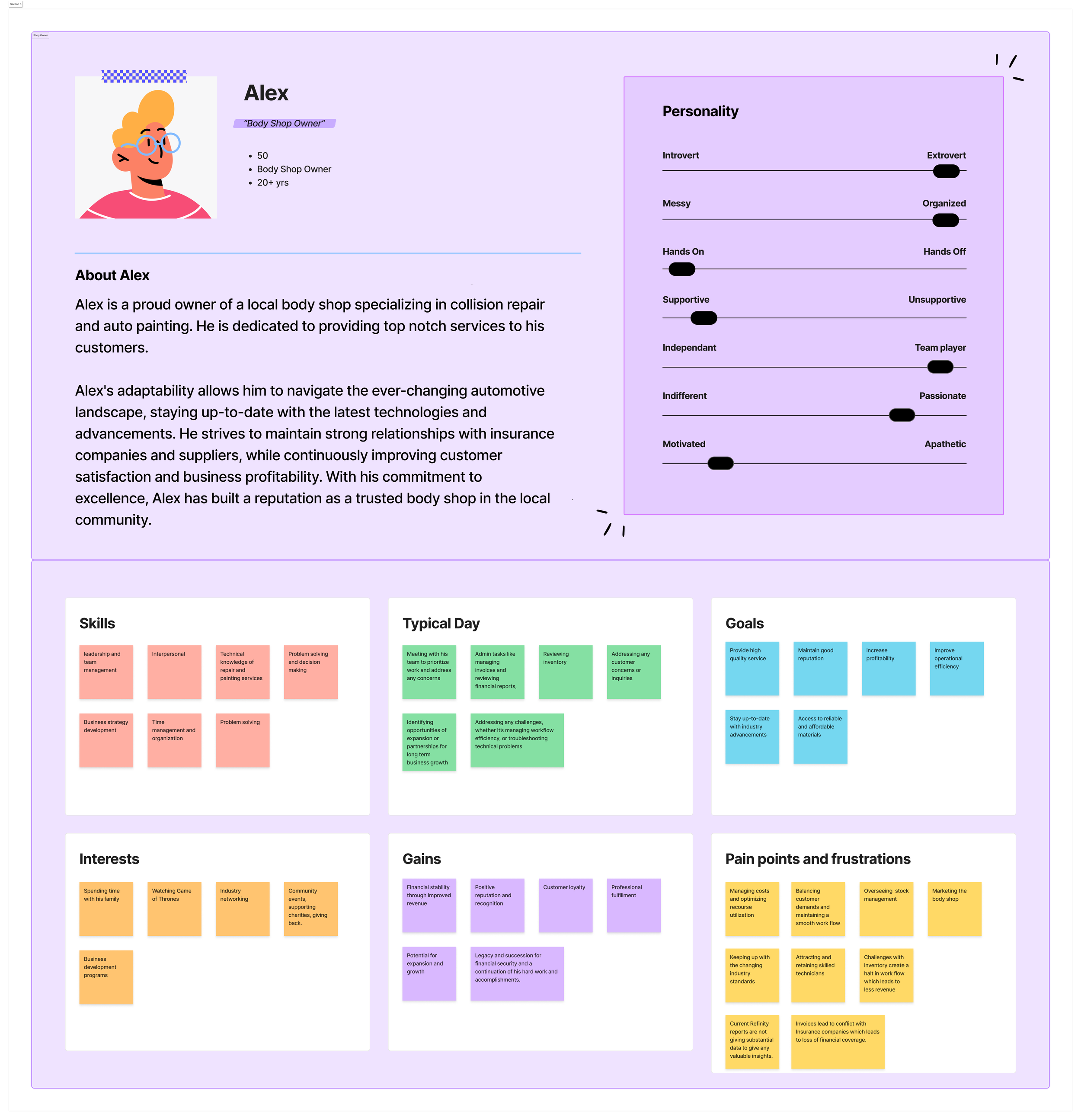
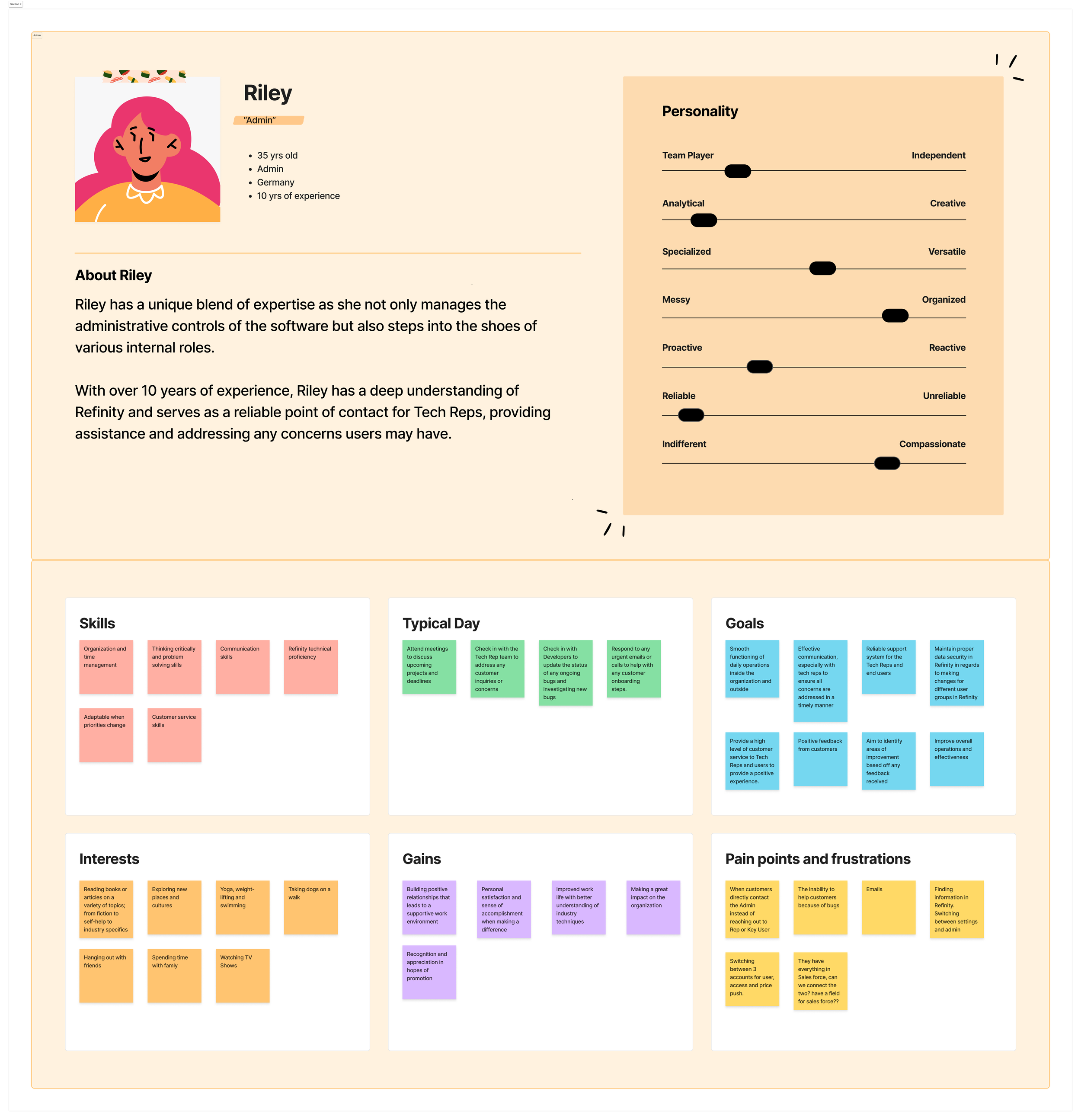
Mapping the Persona
Insights from the field visits informed the creation of a dedicated painter persona that represented their goals, constraints and end to end color workflow. This persona became my north star throughout the redesign, grounding design decisions in real-world behaviors and ensuring the experience consistently supported painters in their day today work.
Painter / Technician: speed, accuracy, minimal interruption
Shop Manager: visibility, reporting, operational clarity
Distributor: ordering efficiency, inventory accuracy
Enterprise Manager: standardization, scalable metrics
-
![]()
Painter
-
![]()
Body Shop Manager
-
![]()
Distributor
-
![]()
Body Shop Owner
-
![]()
Admin
Prioritization Framework
Insights were translated into opportunity areas and used directly in roadmap planning.
Key Findings & Priority:
(High) Visibility: particularly those utilizing RM, expressed challenges with legibility of text throughout the platform
(High) Navigation is tricky and requires an excessive amount of clicks.
(Medium) Support tab: Users are confused as to why it’s not working them. Hiding this tab is in progress.
(Medium)Quick Mix: some shops use it. Others want the option to disable this button.
(Medium) Paint Systems: challenges of creating new ones. Users want to understand what each ‘system’ is made up of.
(High) Reportings: Scrolling to the “Next” button is tedious.
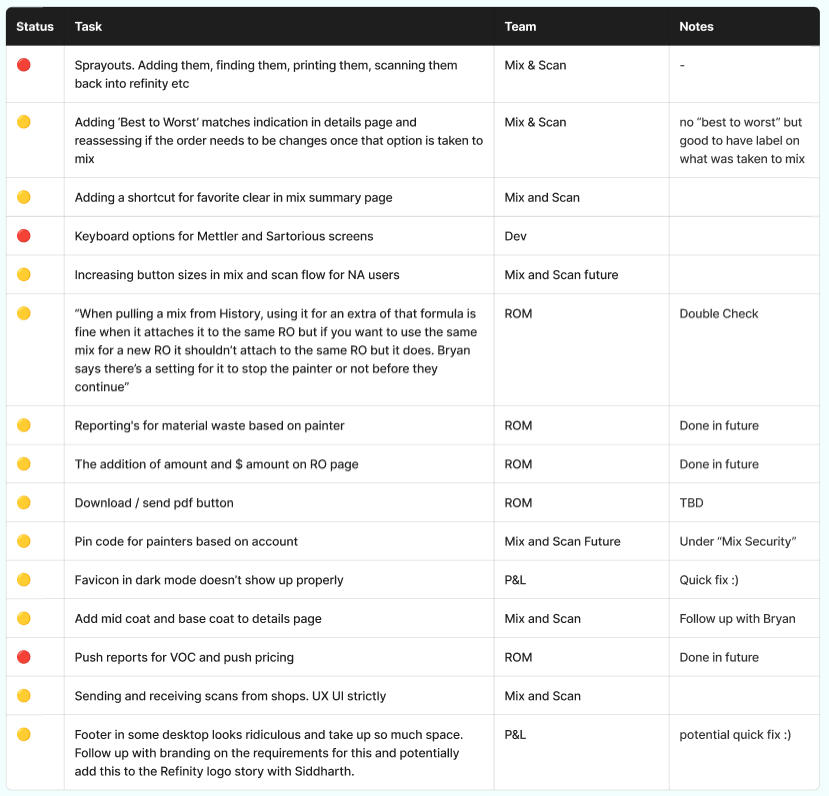
Actionable insights from a single North America visit. This framework was replicated across all visits.Research Impact
Created a shared global understanding of user needs
Research findings reused across multiple initiatives.
Clarified ownership across product areas
Shifted product strategy from platform first to user first decision making.
Shortened and simplified key user journeys
Contributed to improved user satisfaction and product adoption.
Reflection
This work reinforced the importance of structuring research around shared problems rather than regional outputs. Leading synthesis and prioritization not just execution fundamentally changed how research influenced product decisions.