
Hiring Designers for Growth -Finding a Match

Framing a Design Growth Strategy
Opportunity, and Skill Match, Equitable Hiring Practice
Hiring for a design team is by far one of the most fun parts and greatest challenges. As the team scaled, I was actively involved in hiring designers to support both product design and the emerging design system. I partnered with leadership and stakeholders to hire with strategic goals in mind. My approach was to look for a match as best I can for where the goals are. See the work I do to set foundational goals before going into the growth phase.
Opportunity
Finding the right pockets of candidates can be a challenge. Post-COVID, we have seen a global job market open and fold again. Job seekers are now being creative with their networking and as we look to source new talent we should be evolving with them. I have found success in networking, and working to find new channels where up and coming designers may be searching.
Some of my best local finds have been
Slack channels with designers focused in track-areas of design development
Co-op and internship programs to build awareness and a new graduate pipeline
Non traditional job boards and career paths - The Mom Project, Tibaja, and a few others have helped build inclusivity and diversity into my hiring process from the start.
Skill Match
While this process shifts depending on role and team needs, my approach remains consistent. I don’t place heavy emphasis on purely visual design, especially in environments with established design systems and layouts. Instead, I look for strong designers who move beyond aesthetics and understand business needs, constraints, and real world impact. I’m less concerned with polish and more focused on how clearly a designer can explain why they made the decisions they did.
When listening to a designer walk through their design challenge, I pay close attention to their reasoning.
How do they frame the problem?
What tradeoffs did they consider?
How do user needs, technical limitations and business goals shape their decisions?
I’m particularly drawn to designers who don’t blindly follow visual hierarchy patterns or “best practices,” but instead question whether a product or use case requires a more tailored solution. Not every challenge needs a cookie cutter layout. Ultimately, my goal in skill matching is to identify designers who think critically, are intentional and understand that good UX is not just about how something looks, but about how and why it works.
Equitable Hiring Practice
My interpretation of an equitable hiring practice means we strive to give candidates every opportunity possible to show their best work and present their best selves and skills, regardless of what their background is. This means abstracting some of our questions and exercises. Some examples of this in practice:
Ask every candidate the same core questions.
Focus on skills, problem solving and reasoning rather than subjective impressions.
Use real work samples or design challenges relevant to the role.
How I think about design team structure
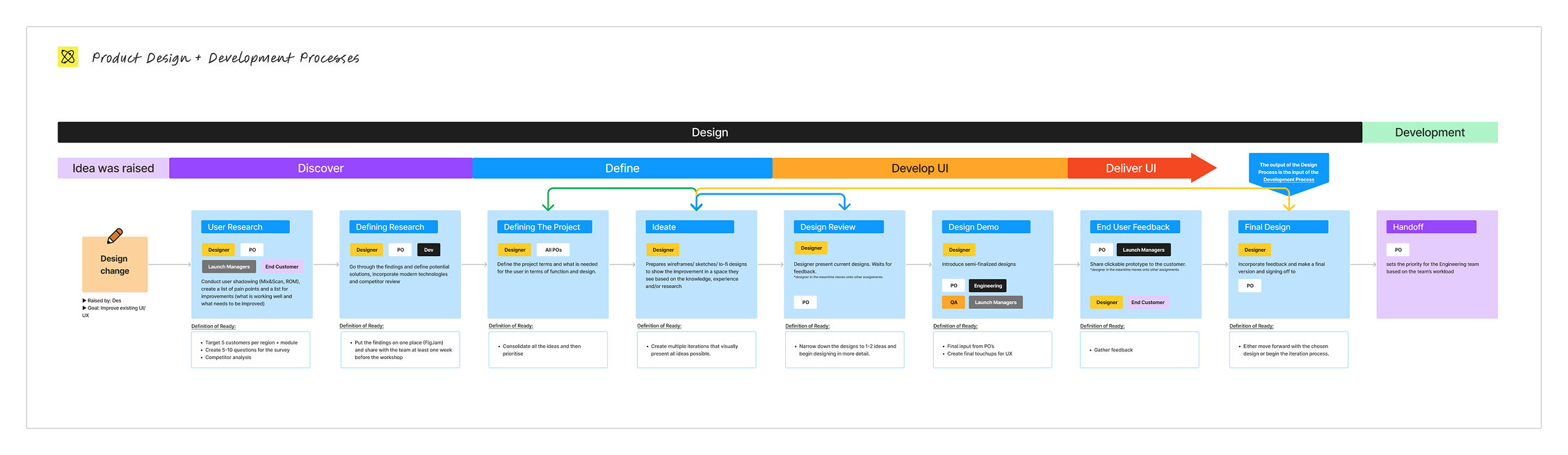
This is an example document of how I think about teams within organizations for a 3-4 person design team size.
Deliverables
Hiring Process Documentation
Below I will outline some different documents that help the Design Team understand what they are looking for and who is a best fit match, together. These documents can align what the business need is, what we are hiring for as a team, and how we evaluate new design talent.
Thorough Job Descriptions
Candidates will do best when they know exactly what role they are interviewing for and what is needed to succeed in their role. Defining the role with clarity and matching that to the interview process sets us up for success.
Interview Process and Question Formats
A defined and structured list of who meets with what roles, with specific guidance on what we are looking for.
Skills Matrix
A matrix of skills that we can assess and rank by number to ensure we are meeting high quality standards, and know where skills need to be built up.
Hiring Values
Our values and what we look for in a team mate should be documented and specifically agreed on by the team. Hiring values and what we look for as a culture fit are shared.